
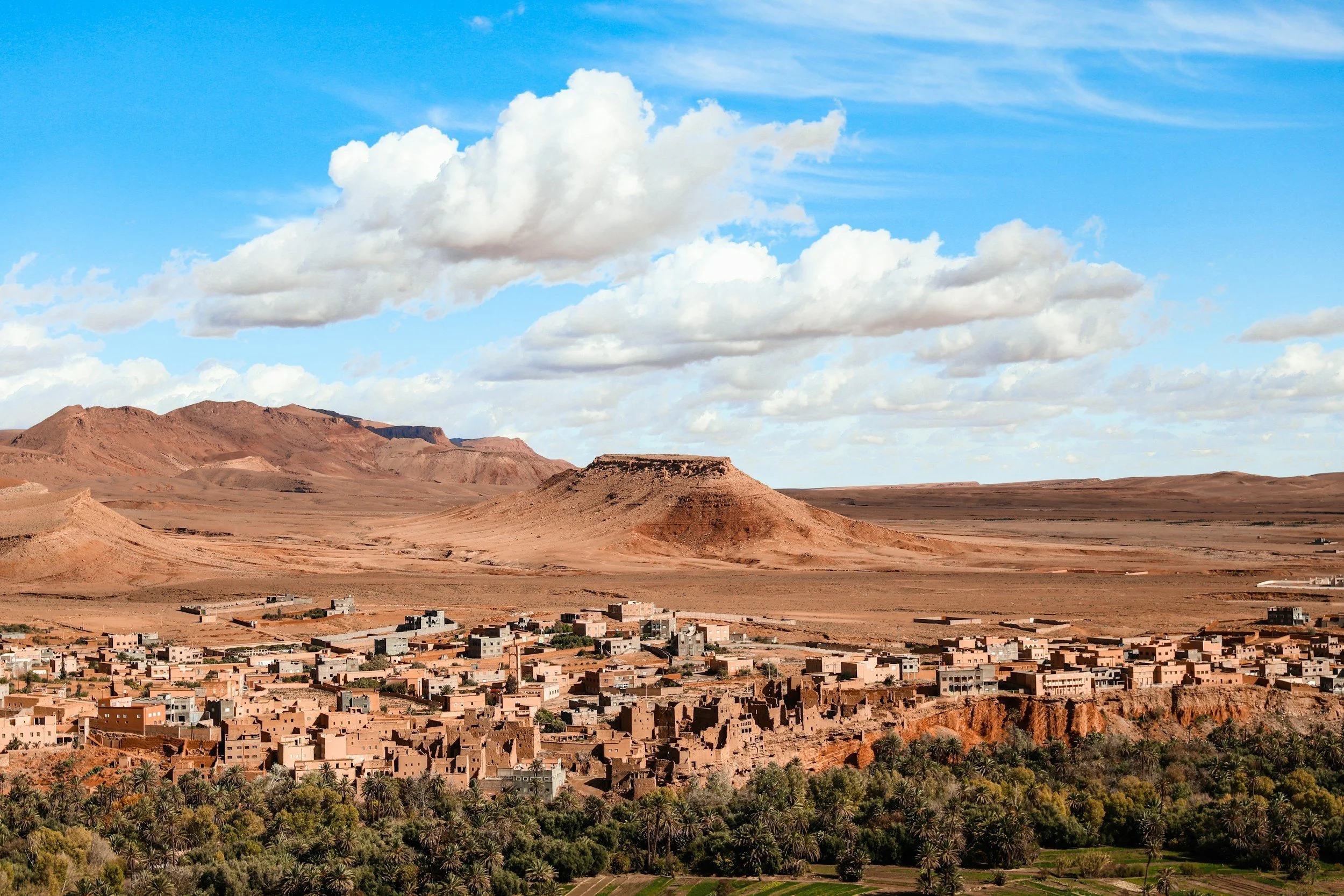
Morocco
Morocco is approaching absolute water scarcity in 2030. This will impact agriculture which employs 25% of the population and constitutes 15% of GDP.
Water scarcity will continue to have significant effects on Morocco's population and economy and is expected to get worse. Morocco is facing increasing water stress driven by climate change, recurrent droughts, population growth, and rising demand from agriculture and urban development.
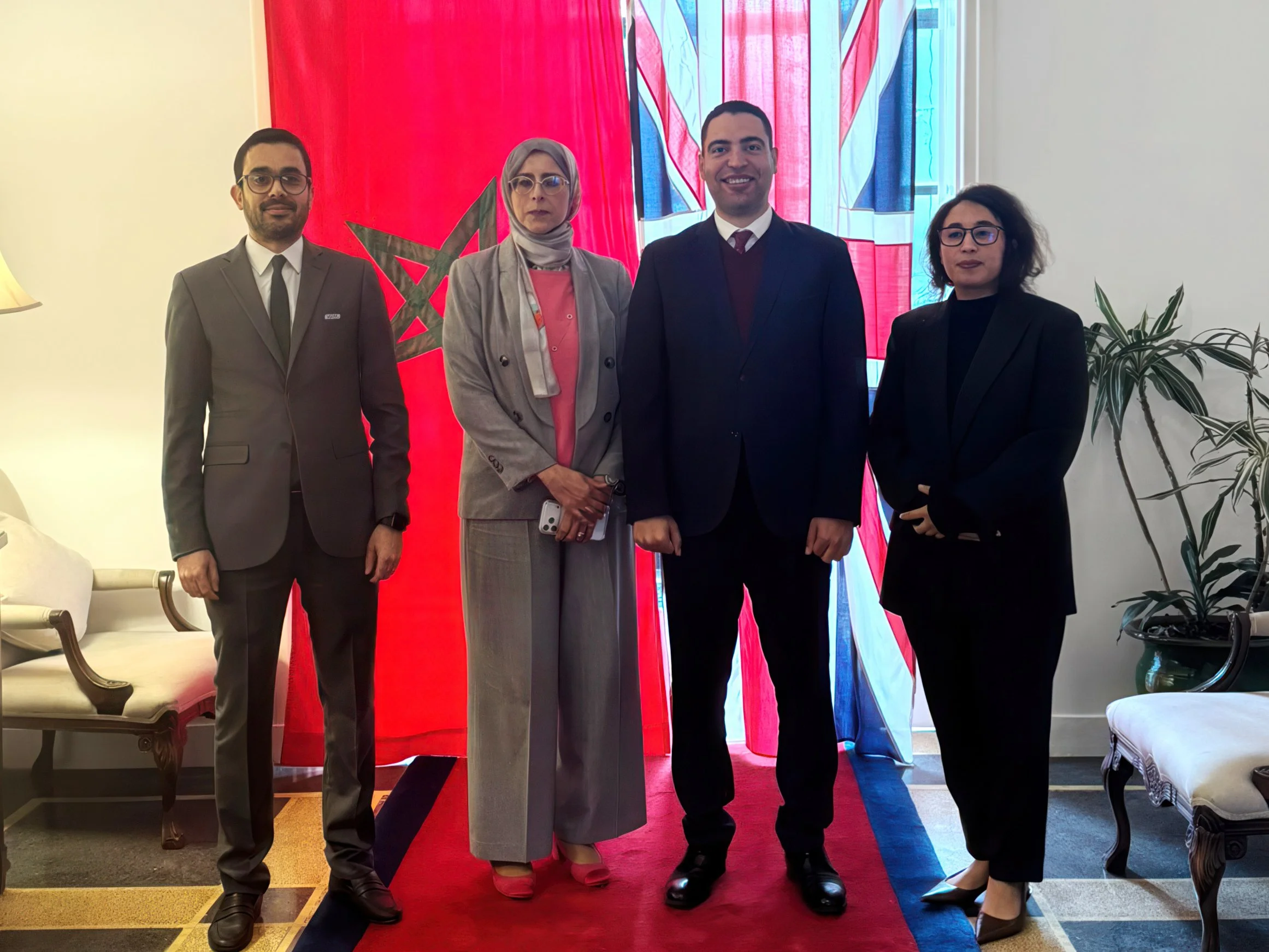
In response, Morocco is actively investing in improving water security by investing in water supply, innovation, and strengthening its governance and institutional arrangement. As a key trading partner of the United Kingdom (UK), Morocco is engaging with the UK-led Just Transitions for Water Security programme, in which the Water Resilience Tracker collaborates with our partners Fair Water Footprints and the Resilient Water Accelerator. In February to March 2025, JTWS engaged with government officials, academics and agricultural stakeholders in Morocco, forming the basis to launch JTWS activities with Morocco in February 2026. For more information about this collaboration and its goals in Morocco, read our Joint Country Entry Study.
Challenges faced by Morocco
-
Morocco is facing severe and growing water challenges. As one of the most water-stressed countries in the world, it is projected to reach a state of absolute water scarcity by 2030—where demand, particularly for agriculture and drinking water, exceeds available resources. Climate change is expected to intensify these pressures by increasing the frequency and severity of droughts, while sea level rise and extreme storm events heighten the risk of flooding in coastal areas, threatening both settlements and economic activity.
-
The agricultural sector is the dominant water consumer in Morocco, accounting for approximately 85-90% of total usage. In contrast, the industrial and services sectors use just 2-4%, with the remainder attributed to domestic consumption. This imbalance underscores the urgent need for more efficient and sustainable water management across all sectors. Morocco's industrial water demand is expected to increase under current policies, driven by strategic investments in industrial development, infrastructure expansion, and water-intensive sectors such as mining, energy, and manufacturing.
Morocco has adopted ambitious frameworks, such as its Nationally Determined Contribution (NDC3.0), the National Climate Plan, and the National Water Strategy. To ensure policy coherence, the Water Resilience Tracker will support national efforts to strengthen synergies between these frameworks by systematically assessing water resilience across policies, institutions, data systems, sectors, equity, ecosystems and finance.
Latest
Resources
The UK Government's Just Transitions for Water Security (JTWS) programme is a £39 million initiative across five years, aimed to support better water management in the face of climate change. It is expected to reach up to 40 million people and aligns with the UK's broader commitments to global climate adaptation and sustainable development.