
Inclusion as Resilience: Operationalizing Equitable Water and Climate Governance
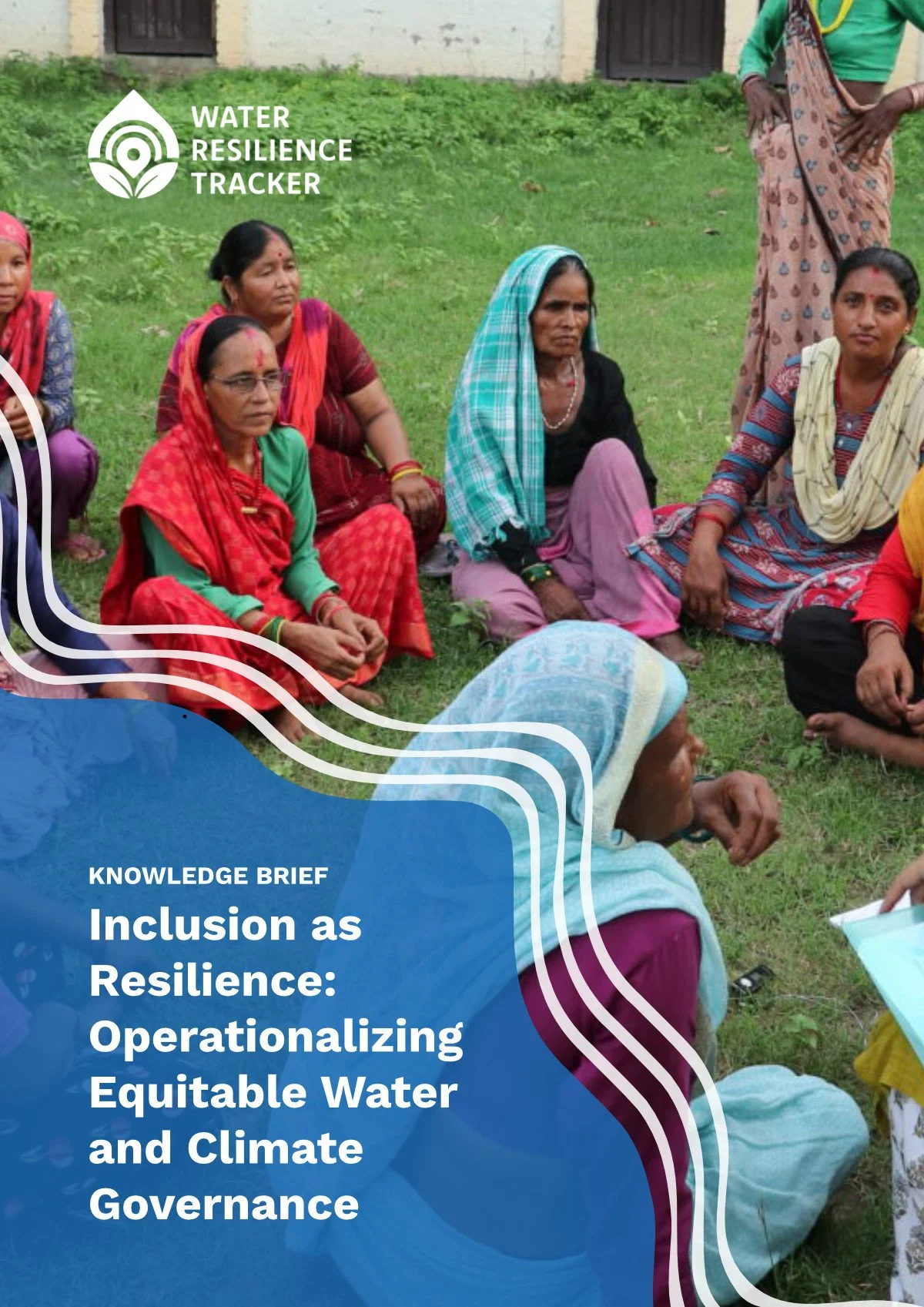
English, PDF
Gender, disability, age, ethnicity, caste, geography, migration status and income all influence who has access to resources, who participates in decision-making, who benefits from public investment, and who bears the cost of environmental degradation. Inclusion is not an auxiliary concern or a programmatic add-on. It is a pre-requisite for effective water and climate resilience. Policies that fail to account for differentiated vulnerabilities and capacities risk entrenching inequalities further and limiting resilience outcomes.
Evidence increasingly demonstrates that inclusive governance strengthens resilience. Water governance, which sits at the intersection of climate adaptation, ecosystem protection, urban development, disaster risk reduction, and human rights, offers a critical entry point for advancing inclusive climate resilience in practice. Integrating gender equality, disability inclusion, and broader social inclusion (GEDSI) into water and climate policy and processes strengthens the legitimacy, effectiveness, and sustainability of resilience outcomes.
This Knowledge Brief examines how inclusion is reflected across global climate and environmental governance frameworks, identifies persistent gaps between rhetoric and implementation, and explores how initiatives such as the Water Resilience Tracker (WRT) can operationalize GEDSI principles at national and sub-national levels for better outcomes. It argues that moving from procedural participation toward substantive power-sharing and equitable financing is essential to achieving resilient water systems that truly leave no one behind.