
Strengthening water resilience in Malawi’s Shire Valley
After strengthening water resilience in Malawi’s national policies and plans, the next step is to identify funded, operational projects to implement at the basin level. A stakeholder consultation workshop in March 2026 kicked off this new phase of work in the Shire Valley.
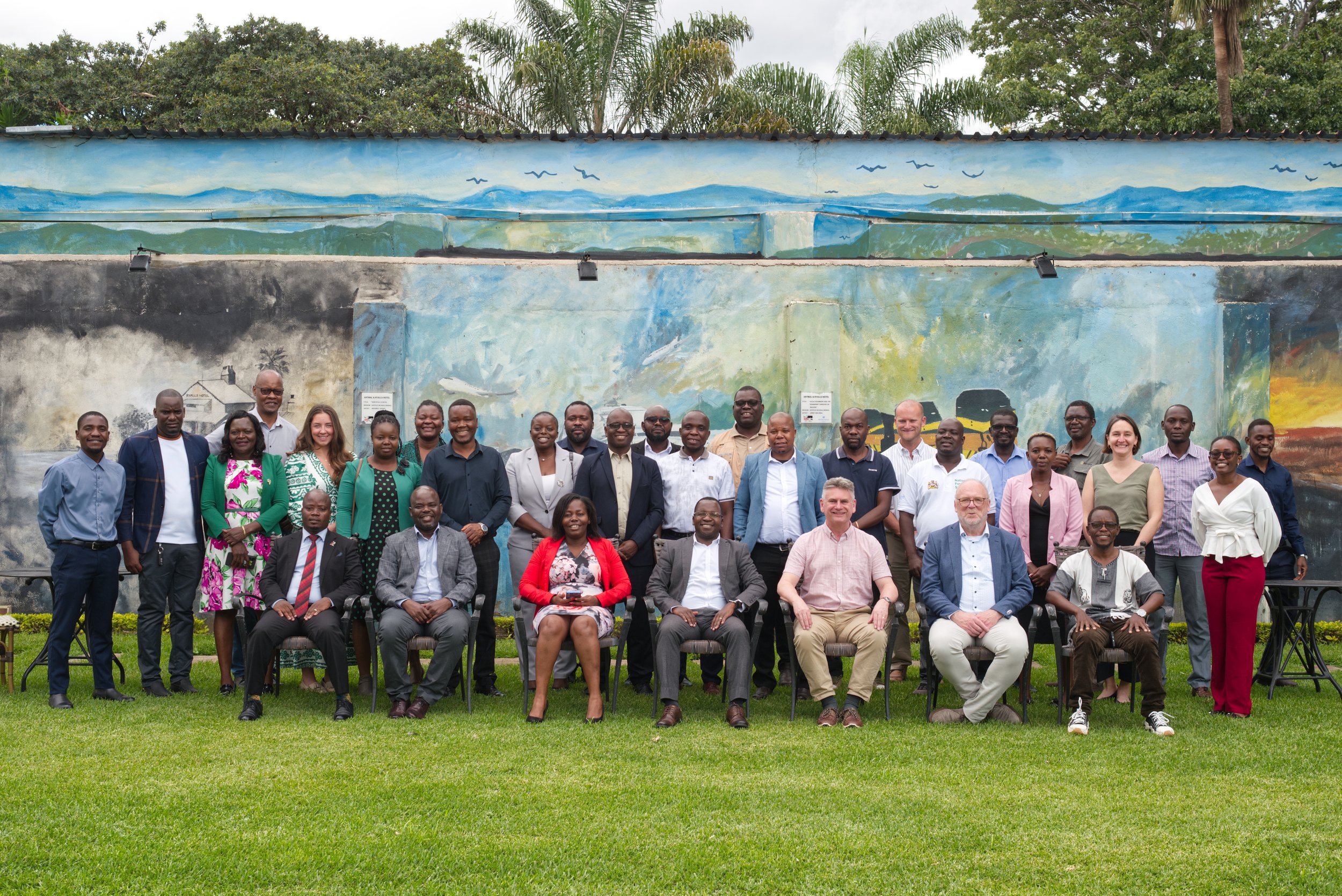
Photo: Attendees at Day 1 of the WRT Shire Valley workshop in March 2026
Malawi has made considerable progress in establishing the policy and planning foundations for water resilience. which included applying the Water Resilience Tracker (WRT) questionnaire at the national level in 2022. To build on the success of this collaboration, the Government of Malawi requested that WRT begin a plan of work focused on the Shire River Basin.
The Shire Valley is the economic and hydrological heartland of Malawi. The Shire River, flowing 400 kilometres from Lake Malawi to the Zambezi, generates approximately 96% of the country's electricity, supports around 50% of its irrigated agriculture, and provides water and sanitation services to an estimated 4.5 million people.
It is also Malawi's most climate-vulnerable river basin, facing increasing drought frequency, intensifying flood events, rising inter-sectoral competition for water, and infrastructure that is poorly adapted to future climate conditions. Addressing these pressures is a national priority.
From national policy to basin-level implementation
Despite the strides made at the national policy level, the challenge facing Malawi is converting those frameworks into funded, operational projects. WRT supports this by helping stakeholders identify and prioritise investments most likely to attract climate finance, while building the institutional capacity to secure and sustain that funding.
To start this work off, WRT held a two-day workshop in Blantyre, Malawi from 23 to 24 March 2026. The workshop marked the first step in applying a structured, basin-level approach to translate existing policies and plans into a prioritised, investment-ready pipeline of resilience interventions. The workshop brought together stakeholders from government, academia, civil society, and the private sector to align on priorities and begin applying two core tools: the WRT diagnostic questionnaire and the Strategic Investment Framework.
Key outcomes
Participants identified a broad set of national, basin, and district-level plans and policies for WRT assessment, focusing on those most critical to investment readiness, cross-sector alignment, and resilience outcomes.
Through systems mapping and indicator discussions, participants built a clearer picture of how the basin functions and where interventions can have the greatest impact.
Critical interdependencies were identified including the links between catchment condition and energy security, water quality and agricultural productivity, and governance capacity and service delivery.
A long list of potential indicators was developed to track resilience across WASH, energy, and agriculture, forming the basis for a future monitoring framework aligned with climate finance requirements.
Next steps
Finalise and assess priority policies with WRT
Develop integrated system maps
Refine a shortlist of resilience indicators
For more information about this work, read our full report (pdf).