
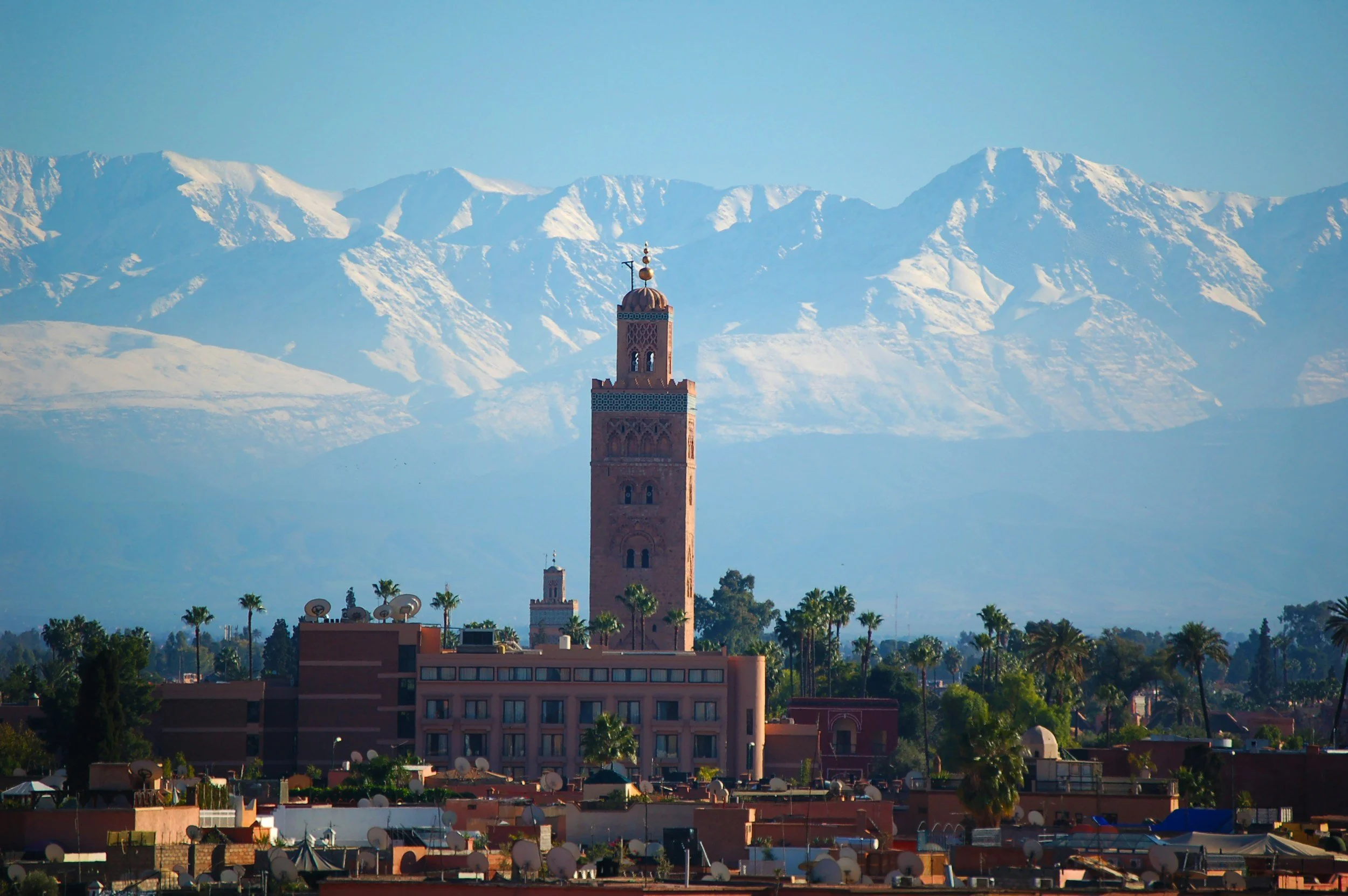
At the northwestern tip of Africa, Morocco has long secured its water supply with large-scale infrastructure projects. Its 154 large dams, with a combined storage capacity of about 20 billion cubic meters, some 150 smaller dams and water highways connecting river basins represent one of the most extensive water infrastructure systems on the continent.
Yet for most of the last decade, a prolonged drought has seen dam levels fall to one third capacity, highlighting an urgent reality: accelerating climate change means that traditional planning paradigms can no longer guarantee water security, highlighting an urgent reality: accelerating climate change means that traditional planning paradigms can no longer guarantee water security for a population of nearly 37 million people.
In response, Morocco has adopted an ambitious portfolio of national climate and sectoral plans, including a national water strategy. The critical question is: do they add up to a water-resilient future?
If, for example, the agriculture sector responds to lower rainfall by expanding irrigation without considering the impact on groundwater supplies and new demand from other sectors, water resilience will be compromised and the plans that depend on it may fall short.
The government of Morocco has been working with the Water Resilience Tracker (WRT) to address this question. After an inception workshop in February 2026, a national taskforce representing multiple Moroccan government ministries, public agencies, academia and civil society worked with WRT to assess 206 indicators of climate-water resilience and inclusivity across 10 national plans and policies.
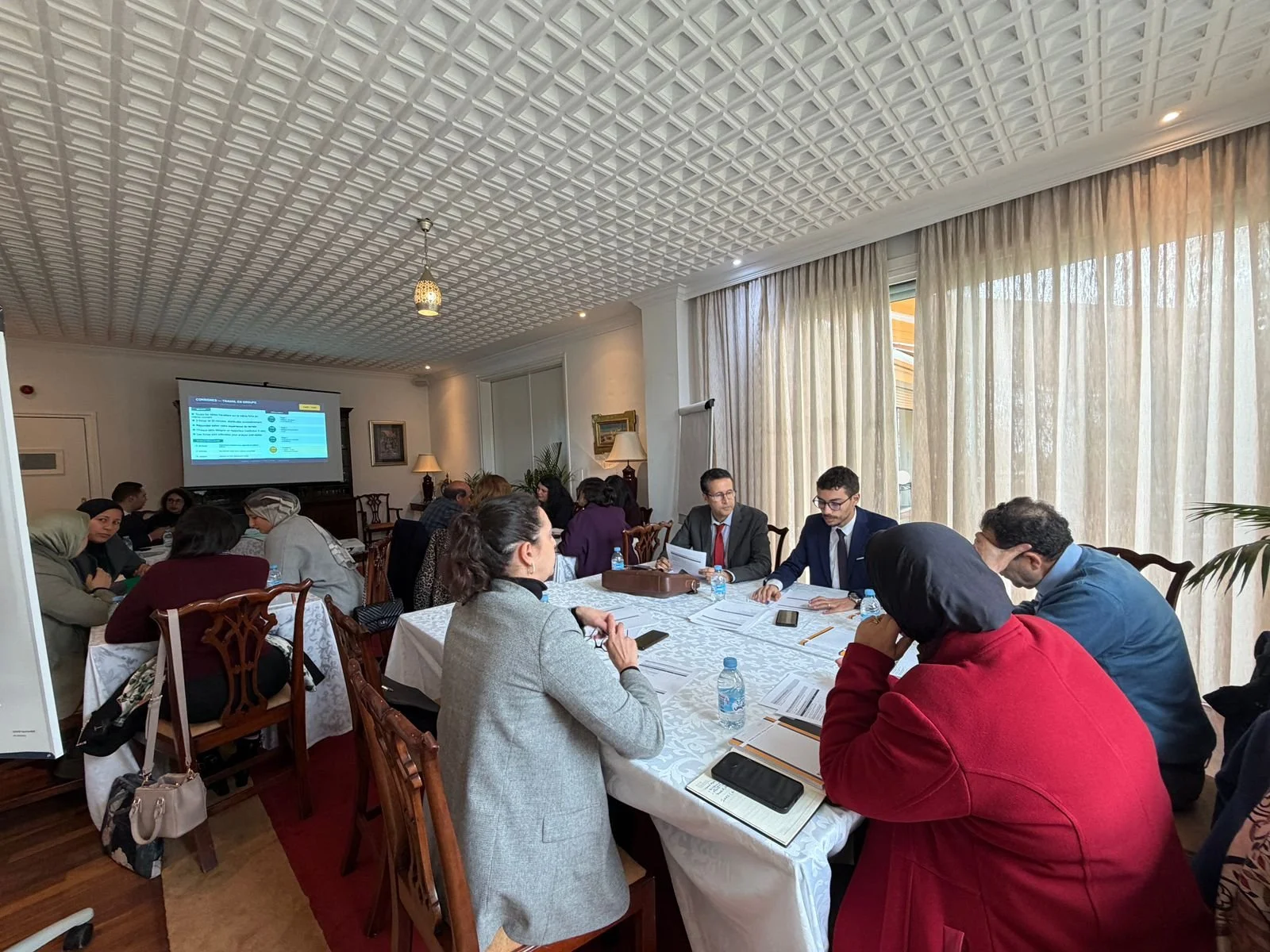
Participants at the National Consultation Workshop on 11 February 2026, hosted by the British Embassy in Rabat, Morocco
The result was a National Diagnostic that fully maps Morocco's water-climate planning landscape, its strengths, gaps, and opportunities to improve, that was presented at a workshop in Rabat in March 2026. It identifies 23 leverage points for Morocco to enhance water resilience, including mandatory climate-water stress testing of public investments, enhanced gender- and disability-disaggregated data, reactivation of national coordination bodies, and development of a national loss and damage dossier.
How water connects challenges and opportunities for Morocco
From the prosperous industrial, agricultural and urban centers of the Atlantic and Mediterranean coasts through the rural communities of the Atlas mountain ranges, central plateaus and the arid pre-Saharan and Saharan South, Morocco is a geographically diverse country highly exposed to climate risks.
From 2018 to 2025, a continuous drought cycle across the country has caused losses of up to 7.6% of national GDP in the worst years, punctuated by flash floods in urban areas and driving rural out-migration. Coastal erosion, saltwater intrusion and increased forest fires add to the pressure on ecosystems.
Across the country, water connects sectors such as agriculture, energy, clean water supply and sanitation, as well as gender and social inclusion.
Agriculture accounts for up to 90% of Morocco's water demand, exceeding groundwater regeneration rates by 862 million cubic meters per year. Only 15-20% of irrigation uses efficient techniques promoted by national policy, yet this saving is cancelled out by agricultural expansion.
Morocco aims to produce a billion tons of desalinated water using 80% renewable energy by 2050, connecting water supply with the national ambition of reducing greenhouse gas emissions by 42%. Although wind and solar make up the majority of these plans, declining reservoir flows impact the contribution from hydropower.
The vast majority of the population benefits from sanitation services, although this falls to 52% coverage in rural areas. Meanwhile just 37% of wastewater treatment plants are operational, making this one of the biggest opportunities to boost water supplies.
Since 2011, the Moroccan constitution guarantees equality between women and men, which includes mandating representation in bodies such as River Basin Agencies and Basin Hydraulic Councils. However, this progress belies the reality of persistent gender gaps in areas such as literacy and economic participation. In rural areas, women are primarily responsible for household water gathering, and unpaid labour is the underpinning feature of the traditional khettara water management system. Women and other groups may be more vulnerable to climate impacts, unintended consequences of government policies and infrastructure projects.
Download the Diagnostic
WRT Country Profile Morocco
Morocco's ambitious plans require climate stress testing and greater focus on inclusion
The 2018 drought prompted a national emergency response from Morocco, which had constructed one of the most comprehensive climate-water policy and institutional frameworks on the continent. The scale of the challenges posed by climate change threaten the coherence of this structure.
Six of the national climate plans included a water adaptation portfolio, including desalination, wastewater treatment, drip irrigation and groundwater recharge. This indicates that they recognise water as a climate risk, a priority sector, and a cross-cutting resource, although plans are only partially coherent across different sectors.
Morocco's NDC 3.0, describing national targets to cut emissions and adapt to climate impacts as part of the Paris agreement, is one of the best in the region. It describes 90 mitigation and 107 adaptation projects in detail, including how USD 96 billion dollars from different sources (43% national public, 41% international and 16% private) will be allocated to achieve climate goals.
However, none of the documents included stress testing against future scenarios for global climate adaptation, leaving the entire investment portfolio vulnerable. With no unified climate tagging, it is impossible to track progress towards the NDC 3.0 funding goal across the national budget.
While the NDC 3.0 includes water requirements for the adaptation portfolio, none of the documents quantifies the water needs of mitigation measures such as green hydrogen, concentrated solar power and reforestation. This means that conflicts may arise between climate mitigation activities and other demands on Morocco's water supply.
On gender equality, disability and social inclusion (GEDSI), five of the documents do not differentiate climate risks by gender or social group, so the specific vulnerabilities of rural women and other at-risk groups are not yet visible in their risk analysis. Unpaid water-related labor is not recognized in any of the documents, seven include no compensation procedures for communities affected by major projects, and eight include no procedures for involving vulnerable groups in decisions on water allocation. Closing these gaps would also strengthen Morocco’s access to international climate funds, whose gender and social inclusion policies require this evidence.
The path forward
Through the application of the WRT in Morocco, a clear picture has emerged of how to embed water resilience in national plans, that was validated by a mix of national stakeholders in Rabat at the end of March 2026. The analysis also outlines three workstreams for follow-up: policies and regulation, institutional capacity and knowledge, and climate finance mobilisation.
To read our analysis and the 23 recommendations in full, download the National Diagnostic Report.
The next step is to agree on the workplan to implement the recommendations to improve policy and regulation, institutional capacity, and Morocco's ability to access vital sources of international climate finance. Meanwhile the Moroccan government has expressed interest in implementing WRT in priority river basins, as happened in countries such as Brazil and Malawi.
This work requires external support to fund the planned activities, and ensure Morocco's plans for climate adaptation and mitigation can be realised. For more information, contact WRT Director Idrees Malyar.